



- LINK’s current chart mirrors past breakouts, suggesting a potential rally.
- Consolidation phase for LINK shows signs of absorbing selling pressure.
- Bitcoin’s low volatility signals similar market conditions as past breakouts.
Chainlink ($LINK) has been displaying a price pattern similar to previous instances when it broke out. The cryptocurrency has come down to a key support level and entered a consolidation phase.
This consolidation is marked by low volatility in the market, particularly in Bitcoin, which has shown little movement during this period. Traders have noticed that past breakouts occurred around 15 to 16 days after such consolidation phases.
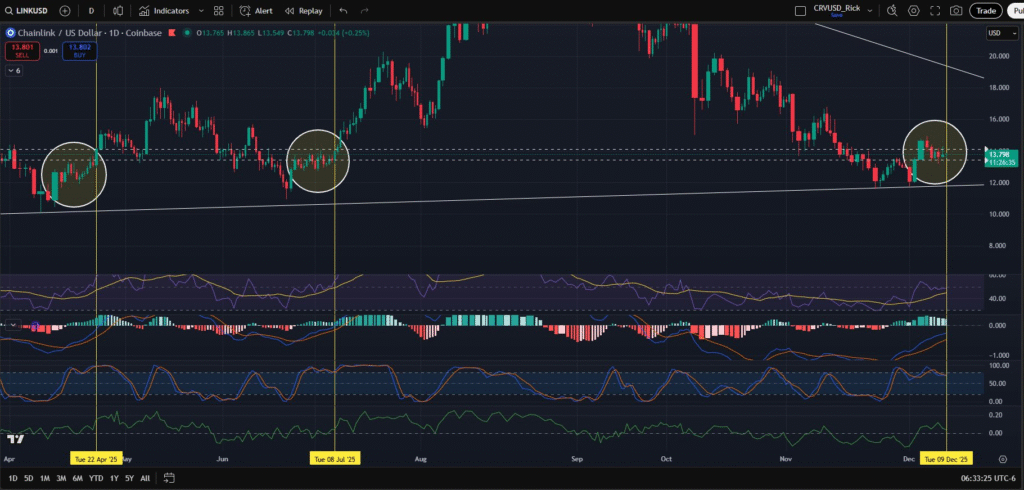
The current market structure and technical indicators align closely with those of previous instances, which raises expectations that LINK could be gearing up for another potential breakout.
Rick Barber, a crypto analyst, noted that the indicators have been in similar positions as seen during the last breakouts. He pointed out that although these setups do not guarantee a breakout, the recurring pattern is worth noting.
Indicators Reflect Strength in LINK’s Price Action
The current technical indicators also suggest that LINK may have already reached its bottom. The volume candles on the chart show notable back-and-forth action, which is more consistent with positioning rather than weakness or distribution.
Sellers have attempted to push the price lower, but each attempt has been absorbed by the market, and the price has failed to drop significantly. This behaviour suggests that the market is unwilling to push LINK lower, and could indicate that a reversal is near.
Traders have observed this pattern before in $LINK’s price action. The consolidation and absorption of selling pressure point to a potential upward movement. If this pattern holds, the price of LINK could be set for another breakout in the near future, similar to past occurrences.
Disclaimer: This article is for informational purposes only and does not constitute financial advice. CoinCryptoNewz is not responsible for any losses incurred. Readers should do their own research before making financial decisions.