



- Crypto market cap remains trapped between $2.05T and $2.75T.
- Analysts watch Bitcoin range breakout for next market direction.
- USDT contraction signals possible easing of selling pressure.
Crypto market cap is drawing attention after analyst Crypto Patel highlighted a potential path toward a $10 trillion valuation. The market currently trades within a broad range, with total capitalization between $2.05 trillion and $2.75 trillion. Traders are monitoring Bitcoin performance and liquidity trends before expecting a major expansion.
Crypto Market Cap Faces Key Range Before Breakout
Meanwhile, market data shows crypto market cap has remained rangebound for nearly six months. Analyst Daan Crypto Trades noted that the current zone matches Bitcoin’s $60,000 to $80,000 trading range.
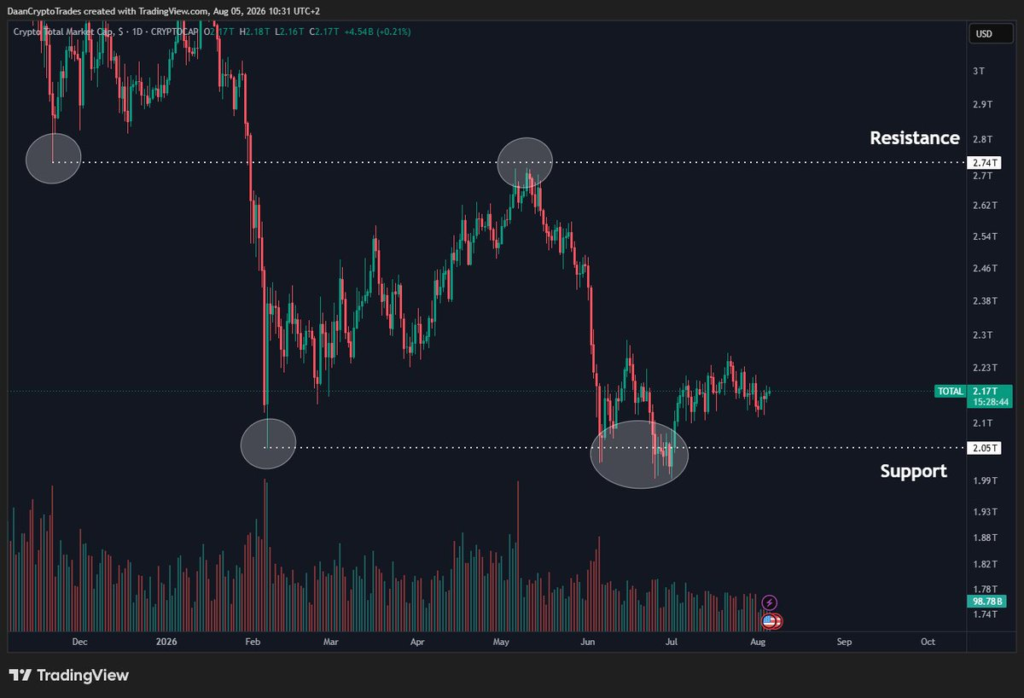
A move above the upper boundary could signal renewed bullish momentum. However, continued trading below the range may keep market conditions uncertain.
The current market structure reflects a period of consolidation after previous volatility. Investors are watching whether capital flows return across major cryptocurrencies and digital asset sectors.
Crypto Market Cap Watches USDT Liquidity Trends
Additionally, CryptoQuant reported that USDT market capitalization has entered historically extreme contraction levels. The analytics platform noted that previous deep USDT declines often appeared near periods when selling pressure approached exhaustion.
Stablecoin liquidity remains an important factor for crypto market cap growth. Higher stablecoin supply can provide additional buying power, while reduced liquidity may limit market participation.
The long-term $10 trillion target depends on several factors, including Bitcoin’s next breakout, institutional demand, and broader crypto adoption. Current market conditions show traders are waiting for stronger signals before positioning for another expansion phase.
Disclaimer: This article is for informational purposes only and does not constitute financial advice. CoinCryptoNewz is not responsible for any losses incurred. Readers should do their own research before making financial decisions.