



- Falling futures open interest signals reduced exposure, not necessarily bearish positioning.
- Hacker-linked wallets moved $137 million in ETH across multiple addresses.
- Developers delayed Hoodi testing while reviewing potential smart contract compatibility problems.
The Ethereum price hovered around $1,800 on November 17 as traders assessed shrinking futures positions and large wallet transfers. Addresses linked to the October Binance hack moved 74,881 ETH, valued near $137 million, according to blockchain analyst Ember. Separately, developers continued reviewing compatibility concerns delaying tests of the planned Glamsterdam upgrade.
Ethereum Price Faces Reduced Futures Market Exposure
Ethereum futures open interest fell to approximately $9.12 billion, its lowest level since October 2024, according to CryptoQuant analysis. The decline measures reduced outstanding exposure across both long and short positions. Falling ETH prices can also lower the metric’s dollar value.
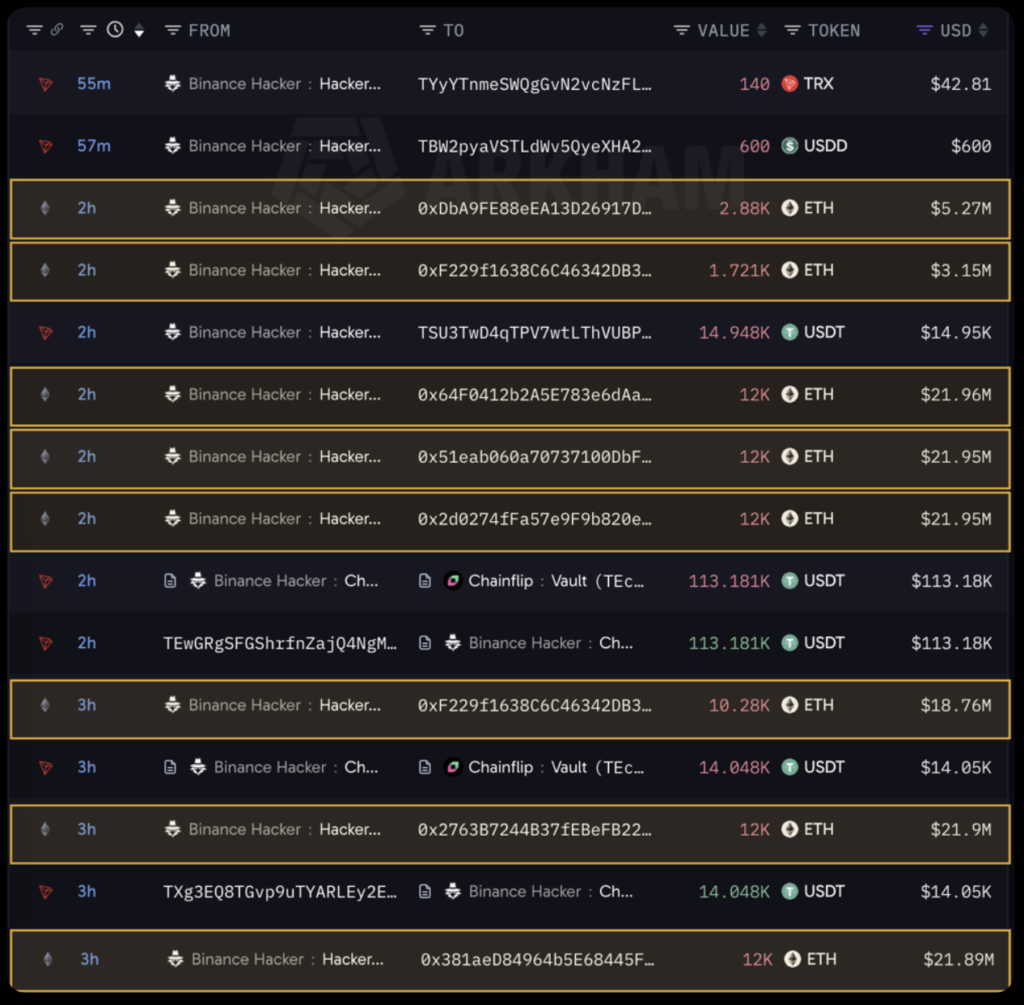
The reported hacker-linked transfers distributed ETH across several addresses within an hour. Those movements alone do not establish that the entire amount reached exchanges or was sold. They also do not prove the transfers caused Ethereum price weakness.
Meanwhile, US spot Ether ETFs recorded $398.9 million in withdrawals during November 9–13. That reduced institutional demand coincided with the recent decline, although it does not explain every Ethereum price movement.
Ethereum Price Targets Contrast With Upgrade Uncertainty
In the supplied commentary, analyst Crypto Patel identified 1,000–1,500 as a historical accumulation zone. His longer-term scenarios include $10,000, $25,000 and $50,000, following a potential move toward $5,000. These remain speculative targets without a stated deadline or probability.
Separately, developer Marius van der Wijden estimated that proposed Glamsterdam changes could disrupt up to 15,000 smart contracts. He estimated exposure of a few hundred thousand dollars across those contracts. That is a compatibility estimate, not a count of applications already broken.
The Ethereum Foundation’s update identifies EIP-8037 and EIP-8038 as changing gas charges and storage assumptions. Applications relying on fixed gas allowances may need adjustments. Hoodi testing remains delayed pending resolution, with developers scheduled to discuss findings and possible revisions on November 19.
Disclaimer: This article is for informational purposes only and does not constitute financial advice. CoinCryptoNewz is not responsible for any losses incurred. Readers should do their own research before making financial decisions.