
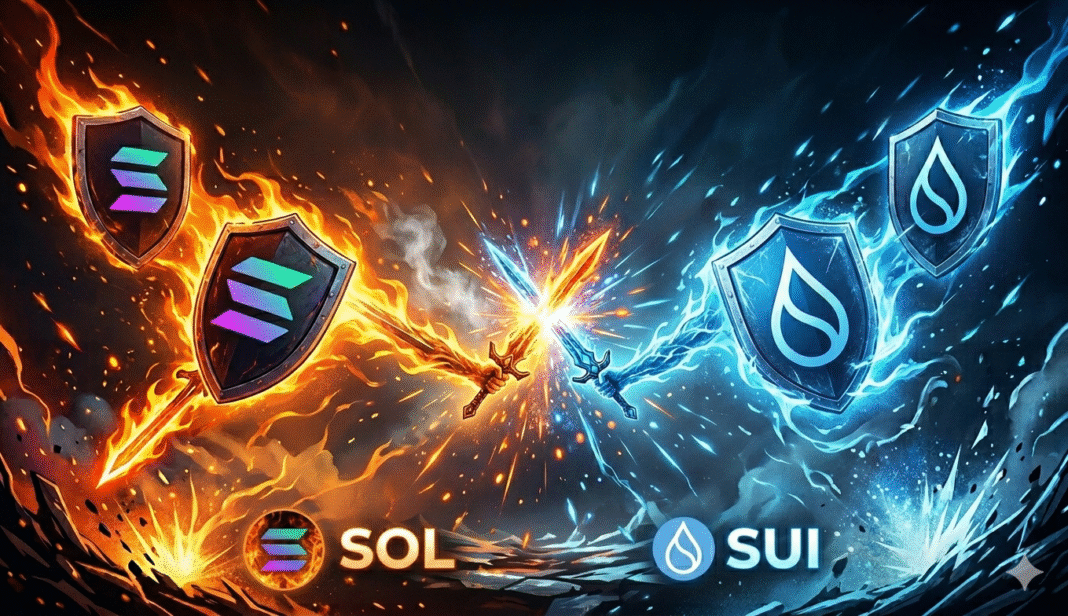

- SOL vs SUI shows stability versus high growth blockchain models
- Solana leads in TVL, staking, and institutional adoption
- Sui shows faster developer growth and higher upside potential
The SOL vs SUI debate is intensifying as two very different Layer 1 blockchains compete for dominance in 2026. Solana brings institutional strength, deep liquidity, and proven scalability, while Sui offers faster developer growth and higher risk-reward potential.
SOL vs SUI Market Battle Defines Layer 1 Competition Shift
The SOL vs SUI comparison is shaping up as one of the most closely watched Layer 1 debates in 2026. Both networks aim for scalability and adoption, but their market positions differ widely. Solana is already a large-cap chain, while Sui is still in early expansion mode.
The SOL vs SUI discussion highlights contrasting risk profiles. Solana trades near $86 with a market cap close to $49.5 billion. In contrast, Sui sits near $0.95 with a much smaller valuation of about $3.75 billion.
Solana shows strong ecosystem maturity with $9.2 billion in DeFi TVL. Meanwhile, Sui holds around $583 million in TVL but shows faster developer growth. These differences shape the ongoing SOL vs SUI narrative across the market.
SOL vs SUI Ecosystem Strength and Growth Outlook Compared
The SOL vs SUI structure reflects two different blockchain strategies. Solana focuses on institutional adoption, staking strength, and high liquidity. Over 70% of SOL supply is staked, supporting network stability.
Sui, on the other hand, focuses on expansion and innovation. The network has recorded 219 percent yearly developer growth and continues to launch new ecosystem programs. This fuels the SOL vs SUI growth debate among traders.
Solana benefits from ETF approval and integration with major financial products. Sui is building momentum through zero-fee transfers and new payment integrations.
Disclaimer: This article is for informational purposes only and does not constitute financial advice. CoinCryptoNewz is not responsible for any losses incurred. Readers should do their own research before making financial decisions.