


- Solana’s proposal to double its disinflation rate aims to accelerate the network’s path to its 1.5% terminal inflation, enhancing token scarcity and potentially increasing SOL’s value.
- By halving the time to reach terminal inflation, the change will drastically reduce the number of new SOL tokens entering circulation, eliminating billions in potential sell pressure.
- While Solana’s price shows short-term fluctuations, the disinflation strategy could contribute to long-term stability and value growth, strengthening investor confidence.
Solana’s development team has proposed a significant change in the disinflation rate of its native token, SOL. The update involves doubling the current disinflation rate, accelerating the process that will lead the network to reach its 1.5% terminal inflation target twice as fast. This proposal aims to reduce the supply of SOL tokens entering the market, thus driving scarcity and potentially increasing the token’s long-term value. If implemented, the change could remove up to 22 million SOL from future emissions, eliminating billions of potential sell pressure.
Solana’s Plan to Tighten the Supply Curve
The proposed change to Solana’s disinflation process will drastically slow the increase of new SOL tokens. By halving the time it takes to reach the terminal inflation rate, the plan effectively reduces the rate of emission. With fewer tokens entering circulation, the scarcity of SOL will grow stronger over time. The move aims to reinforce Solana’s long-term economic story, presenting a stronger narrative for its potential value increase.
The impact of the proposal is clear: Solana will generate far fewer new tokens in the next few years, tightening its supply curve. As emissions drop faster than expected, the overall supply will become increasingly constrained. This tightening of the supply chain is designed to make Solana a more scarce and valuable asset in the long run, improving its appeal in the market.
This change is not just about reducing inflation; it is a strategic move to build a more disciplined economic model. By controlling inflation at a faster rate, Solana intends to assert its position as not only a high-performance network but also an economically sound one. The proposal also suggests that around 22 million SOL tokens will be permanently removed from the future emission schedule, which can result in billions of dollars’ worth of sell pressure being eliminated from the market.
The Inflation and Supply Growth Scenarios for Solana
To better understand the effect of the proposed changes, Solana has outlined several scenarios comparing different inflation rates and their impact on staking yields and total supply growth. A significant reduction in inflation rates will result in fewer tokens being created. The new supply growth curve will be much slower, preserving the token’s value by limiting the increase in total supply.
Source: Coinmarketcap
One graph shows the effects of varying disinflation rates: -15% and -30%. Under a more aggressive -30% disinflation rate, the network would reach its 1.5% terminal inflation much sooner, in about 3.1 years. In contrast, the -15% disinflation rate would achieve the target at a slower pace, in about 5.2 years.
This model highlights how Solana plans to strike a balance between inflation control and staking yields. As the disinflation rate accelerates, staking rewards are expected to drop, but the reduction in new token emissions will likely compensate for this by making SOL more valuable. In the long term, the tighter supply and quicker disinflation could create a more stable, economically disciplined token, which benefits the overall ecosystem.
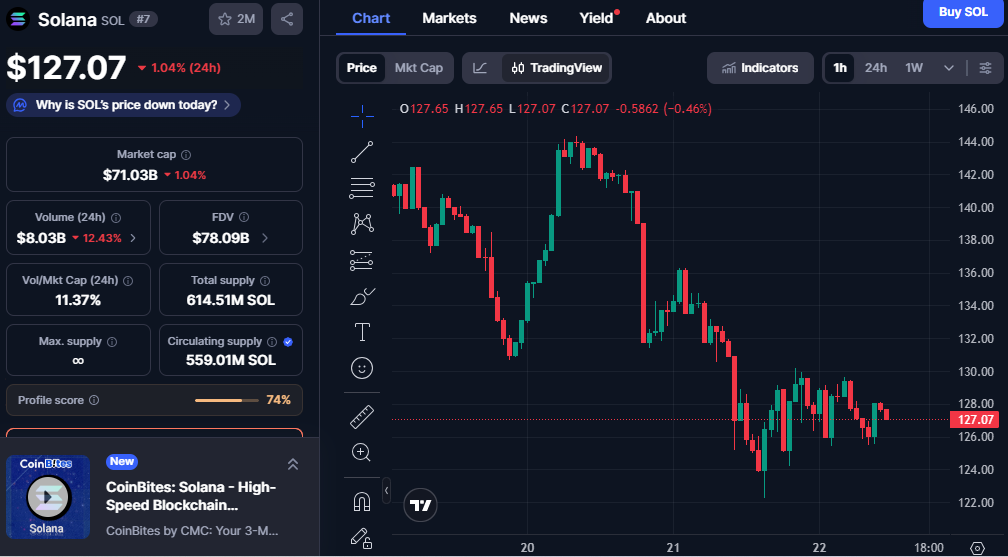
While Solana’s price has experienced some correction, the long-term impact of the proposed disinflation strategy could support its price in the future. With the expectation that fewer SOL tokens will be entering the market, the tightening supply might reduce downward price pressure. As the network aims to become more economically disciplined, these changes may ultimately bolster investor confidence in Solana’s future growth.
Disclaimer: This article is for informational purposes only and does not constitute financial advice. CoinCryptoNewz is not responsible for any losses incurred. Readers should do their own research before making financial decisions.