


Understanding Blockchain and Self-Custody Without the Technical Jargon
Cryptocurrency is often introduced with complex terminology such as cryptographic hashes, distributed consensus, digital signatures, and public-private key cryptography. While these technologies are essential behind the scenes, they can make the subject appear far more complicated than it actually is.
At its core, cryptocurrency revolves around answering two simple questions:
- Who keeps track of ownership and transactions?
- Who has the authority to control and spend those assets?
The first question is answered by blockchain technology, while the second is answered by self-custody.
Once these two concepts are understood, the foundation of cryptocurrency becomes significantly easier to grasp.
Blockchain: A Public Ledger That Everyone Can Verify
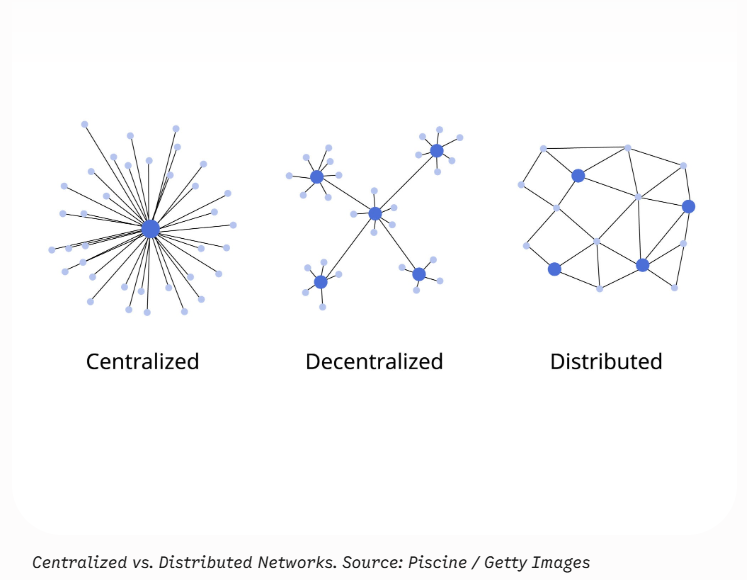
Before understanding blockchain, it helps to understand how traditional financial systems work.
Whenever you use a debit card, transfer money online, or make a digital payment, no physical money actually moves between accounts. Instead, your bank updates its internal database.
For example, if you purchase a $10 meal:
- Your account balance decreases by $10.
- The restaurant’s account increases by $10.
The bank maintains the official record of these balances. Every customer trusts the bank to keep accurate records because the bank acts as the central authority.
This system has worked for decades, but it comes with an important trade-off: all trust is placed in a single institution.
If the bank experiences technical failures, freezes an account, makes an accounting error, or becomes insolvent, customers may temporarily—or in extreme cases permanently—lose access to their funds.
Blockchain introduces a fundamentally different approach.
Instead of one organization maintaining a private ledger, thousands of independent computers around the world maintain identical copies of the same public ledger.
No single company owns it.
No individual can secretly modify it.
Every participant helps verify that the records remain accurate.
The Group Ledger Analogy
Imagine ten close friends regularly split expenses during vacations.
Rather than using payment apps, they agree to keep a shared record.
Whenever Alice pays Bob $20, she announces:
“Alice paid Bob $20.”
Before recording the transaction, everyone checks their own notes to confirm Alice actually has enough balance.
If everything matches, each friend updates their own notebook.
Now suppose Dave later changes only his notebook to say:
“Bob paid Dave $500.”
The problem is obvious.
The other nine notebooks don’t match Dave’s version.
Because everyone can compare records, Dave’s altered history is immediately rejected.
No one accepts his fake transaction because the majority agrees on the correct version.
This simple example captures the essence of blockchain.
Instead of ten friends:
- There are thousands of independent computers called nodes.
- Instead of notebooks, they maintain copies of the blockchain ledger.
- Instead of verbal confirmation, computers use mathematical rules to verify every transaction.
Because thousands of copies exist simultaneously, altering historical records becomes extraordinarily difficult.
Why Is It Called a Blockchain?
Transactions are grouped together into collections called blocks.
Once a block is verified, it becomes permanently connected to the previous block.
Over time, these linked blocks create a chronological chain of financial history.
Each new block references the one before it, making it extremely difficult to alter previous records without changing every block that follows.
This structure gives blockchain its name.
More importantly, it provides transparency and integrity.
Anyone can inspect the public ledger, yet nobody can secretly rewrite it.
Why Blockchain Matters
Blockchain offers several important advantages over traditional centralized databases.
Transparency
Every confirmed transaction is recorded on a public ledger that anyone can inspect.
Although wallet addresses are visible, they are not automatically connected to real-world identities.
Security
Because thousands of independent computers maintain identical records, there is no single database for an attacker to manipulate.
Changing past transactions would require overwhelming consensus across the network, which is practically impossible for major blockchains.
Availability
Traditional financial services depend on a company’s servers remaining operational.
Public blockchains continue functioning as long as enough participating computers remain online.
There is no central switch that can simply turn the network off.
Reduced Reliance on Intermediaries
Instead of trusting one bank or payment processor, users trust a network governed by transparent rules that everyone can verify.
This doesn’t eliminate all risks, but it changes where trust is placed.
Ownership in Cryptocurrency
Recording ownership is only part of the equation.
The next question is:
How do you prove that a particular cryptocurrency belongs to you?
The answer lies in digital keys.
Understanding Crypto Wallets
Many newcomers believe cryptocurrencies are stored inside a wallet.
This isn’t actually true.
Your coins never leave the blockchain.
Instead, a crypto wallet stores the credentials that allow you to control assets recorded on the blockchain.

Those credentials consist of two essential components:
- A public address
- A private key
Public Address: Your Receiving Address
A public address functions similarly to an email address or a mailbox.
It can safely be shared with anyone.
People use it to send cryptocurrency to your wallet.
Just as anyone can mail a letter to your home, anyone can send cryptocurrency to your public address.
Sharing it does not compromise your funds.
Private Key: Proof of Ownership
The private key is completely different.
Think of it as the physical key that unlocks your mailbox.
Possessing the private key proves that you have the authority to move the cryptocurrency associated with that wallet.
Anyone who obtains your private key gains complete control over your assets.
Unlike passwords that can usually be reset, private keys generally cannot be replaced.
If they are lost or stolen, access to the cryptocurrency may be permanently lost.
| Component | Purpose | Safe to Share? |
|---|---|---|
| Public Address | Receive cryptocurrency | Yes |
| Private Key | Authorize transactions | Never |
Seed Phrase: Your Ultimate Backup
When creating a self-custody wallet, users receive a sequence of 12 to 24 randomly generated words.
This is called the seed phrase or recovery phrase.
The seed phrase is the master backup for your wallet.
Rather than storing cryptocurrency itself, it allows the wallet to recreate all the private keys associated with your addresses.
Imagine your smartphone is destroyed.
The blockchain still contains your cryptocurrency.
Nothing has happened to your assets.
By installing a wallet application on another device and entering the original seed phrase, your wallet regenerates the same private keys, restoring access to your funds.
For this reason, the seed phrase is often considered more valuable than the wallet itself.
Whoever possesses the seed phrase effectively possesses every private key generated from it.
Self-Custody vs. Centralized Custody
Cryptocurrency owners generally choose between two approaches.
Centralized Custody
Many users leave their assets on cryptocurrency exchanges.
In this arrangement:
- The exchange controls the private keys.
- The user accesses funds through an account and password.
- The exchange handles security and storage.
This approach is convenient and resembles online banking.
However, it requires trusting the exchange.
If the platform experiences financial problems, technical failures, security breaches, or restricts withdrawals, customers may temporarily lose access to their assets.
Self-Custody
With self-custody:
- You control your own private keys.
- No institution can freeze your wallet.
- No company can recover your seed phrase.
- Responsibility for security rests entirely with you.
Self-custody offers greater independence but also demands greater discipline.
Hot Wallets and Cold Wallets
Self-custody wallets generally fall into two categories.
Hot Wallets
Hot wallets remain connected to the internet.
Common examples include:
- Mobile applications
- Desktop software
- Browser extensions
They provide fast, convenient access for everyday transactions.
Because they operate on internet-connected devices, they are more exposed to threats such as:
- Malware
- Phishing attacks
- Fake wallet applications
- Malicious browser extensions
Hot wallets are excellent for convenience but require careful security practices.
Cold Wallets
Cold wallets, also called hardware wallets, store private keys on dedicated physical devices.
These devices remain isolated from internet-connected computers.
When sending cryptocurrency:
- The transaction is created on a computer.
- The hardware wallet verifies the details.
- The transaction is digitally signed inside the secure device.
- Only the signed transaction—not the private key—is transmitted to the blockchain.
Even if the computer is infected with malware, the private key remains safely inside the hardware wallet.
For long-term holdings, cold wallets are widely regarded as one of the safest storage methods.
Best Practices for Protecting Your Wallet
Owning cryptocurrency also means protecting access to it.
Some essential security practices include:
- Store your seed phrase offline.
- Never save your seed phrase in cloud storage.
- Never share your private key or recovery phrase with anyone.
- Verify wallet software before downloading.
- Double-check recipient addresses before sending funds.
- Be cautious of phishing websites and fake support personnel.
- Enable two-factor authentication on exchange accounts.
- Consider using a hardware wallet for significant holdings.
Remember that legitimate wallet providers and exchanges will never ask for your seed phrase.
Anyone requesting it is attempting to gain control of your assets.
The Golden Rule of Cryptocurrency
One phrase summarizes the philosophy of self-custody better than any other:
“Not your keys, not your crypto.”
If another organization controls your private keys, it ultimately controls your cryptocurrency.
Only when you personally control the keys do you possess complete ownership over your digital assets.
With that ownership comes responsibility.
There is no customer support department capable of reversing blockchain transactions or restoring lost private keys.
The decentralized nature of cryptocurrency removes many intermediaries—but it also removes many traditional safety nets.
Understanding this balance between freedom and responsibility is one of the most important lessons for anyone entering the world of digital assets.
Frequently Asked Questions (FAQs)
1. Is cryptocurrency stored inside my wallet?
No. Cryptocurrency always exists on the blockchain. Your wallet stores the cryptographic credentials (private keys) that allow you to access and manage those assets.
2. What happens if I lose my phone?
If you have securely backed up your seed phrase, you can install the wallet on a new device and recover access to your funds
3. What if I lose my seed phrase?
If the seed phrase is lost and no other backup exists, you may permanently lose access to your cryptocurrency. There is typically no recovery process.
4. Can someone steal my cryptocurrency if they know my wallet address?
No. A wallet address is public and designed to be shared. Funds can only be moved using the corresponding private key.
5. What is the difference between a private key and a seed phrase?
A private key controls a specific wallet address. A seed phrase is a master backup that can regenerate all the private keys associated with your wallet.
6. Are blockchain transactions reversible?
Generally, no. Once a transaction has been confirmed on the blockchain, it cannot simply be canceled or reversed. Always verify recipient addresses before sending funds.
7. Should beginners use a hot wallet or a cold wallet?
Hot wallets are convenient for learning and handling small amounts. Cold wallets are generally preferred for storing larger amounts or long-term holdings because they keep private keys offline.
8. Is keeping cryptocurrency on an exchange safe?
Reputable exchanges often implement strong security measures, but they retain control of your private keys. Many experienced users keep only trading funds on exchanges and move long-term holdings to self-custody wallets.
9. Can blockchain be hacked?
Major public blockchains are designed to be highly resistant to tampering because thousands of independent nodes verify transactions. However, wallets, exchanges, and individual users can still be compromised through poor security practices or scams.
10. Why is self-custody considered important?
Self-custody gives you direct control over your digital assets without relying on a third party. It aligns with the decentralized philosophy of cryptocurrency, but it also means you are fully responsible for safeguarding your private keys and recovery phrase.
Disclaimer: This article is for informational purposes only and does not constitute financial advice. CoinCryptoNewz is not responsible for any losses incurred. Readers should do their own research before making financial decisions.