



Blockchain technology has evolved significantly, with multiple layers designed to enhance scalability, security, and efficiency. These layers—Layer 1 (L1), Layer 2 (L2), and Layer 3 (L3)—play a crucial role in optimizing blockchain networks for various use cases. This article provides an in-depth look at each layer and its significance in the broader blockchain ecosystem.
Visual Representation of Blockchain Layers
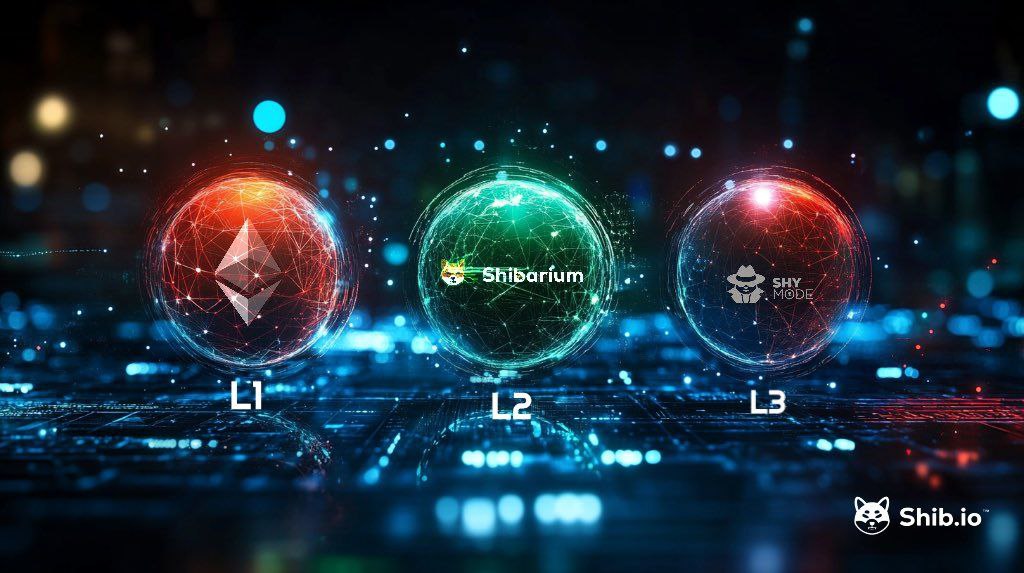
The image below illustrates the three fundamental blockchain layers:
- Layer 1 (L1): The base blockchain responsible for security and decentralization (e.g., Ethereum).
- Layer 2 (L2): A scaling solution built on L1 to improve speed and reduce transaction costs (e.g., Shibarium).
- Layer 3 (L3): The application layer that enables decentralized applications (dApps), gaming, and enhanced privacy features (e.g., Shy Mode).
Layer 1 (L1): The Foundation of Blockchain Networks
Layer 1 serves as the backbone of blockchain technology, ensuring transaction security, decentralization, and consensus. These blockchains operate independently and validate transactions without relying on external systems.
Key Features of Layer 1:
Secure and decentralized ledger
Consensus mechanisms (Proof of Work, Proof of Stake)
Smart contract execution (Ethereum, Solana)
Examples of L1 Blockchains:
- Bitcoin (BTC): The first and most secure blockchain, primarily used for digital payments.
- Ethereum (ETH): A programmable blockchain that supports smart contracts and dApps.
- BNB Chain (BNB): A high-performance blockchain designed for DeFi applications.
- Solana (SOL): A fast and scalable blockchain optimized for high-speed transactions.
Challenges of L1:
Scalability limitations (low transaction throughput)
High gas fees during peak network activity
Slower transaction speeds compared to centralized systems
To overcome these limitations, Layer 2 solutions were introduced.
Layer 2 (L2): Enhancing Speed and Reducing Costs
Layer 2 solutions build on top of Layer 1 to improve transaction speed, lower costs, and enhance overall efficiency. These solutions process transactions off-chain while maintaining security through periodic settlement on L1.
Benefits of Layer 2:
Increased transaction throughput
Lower gas fees
Reduced network congestion
Examples of L2 Solutions:
- Polygon (Ethereum L2): A scaling solution for Ethereum that reduces gas fees.
- Lightning Network (Bitcoin L2): Enables instant Bitcoin transactions with minimal fees.
- Shibarium (Ethereum L2): A Layer 2 solution for the Shiba Inu ecosystem, enhancing speed and efficiency.
Types of L2 Scaling Solutions:
Rollups: Process multiple transactions off-chain and submit them in batches to L1 (e.g., Optimistic Rollups, ZK-Rollups).
State Channels: Enable private and fast transactions between users without burdening L1.
Sidechains: Separate blockchains that interact with the main chain while maintaining security.
While L2 solutions address scalability issues, the need for interoperability and real-world applications has led to the development of Layer 3.
Layer 3 (L3): Enabling Advanced Applications and Interoperability
Layer 3 is the application layer that supports decentralized applications (dApps), smart contracts, gaming, and enhanced privacy features. It enables seamless communication between different blockchain networks and provides specialized functionalities.
Key Functions of L3:
Hosts decentralized applications (DeFi, NFT platforms, metaverses)
Facilitates cross-chain interoperability
Enhances privacy and scalability
Examples of L3 Solutions:
- Ethereum & Solana: Support DeFi apps, NFT marketplaces, and metaverse projects.
- CakeFi: A decentralized finance (DeFi) platform built for Bitcoin.
- Shy Mode (Shibarium L3): Focuses on privacy, interoperability, and advanced dApp functionalities.
By leveraging L3, blockchain ecosystems can expand their capabilities beyond simple transactions, paving the way for real-world use cases.
The Importance of Blockchain Layering
Blockchain technology requires multiple layers to achieve optimal performance, usability, and efficiency. Each layer serves a distinct purpose:
✔ L1 ensures security and decentralization (Ethereum, Bitcoin).
✔ L2 improves scalability and reduces costs (Shibarium, Lightning Network).
✔ L3 powers applications and cross-chain interoperability (Shy Mode, DeFi platforms).
As blockchain adoption grows, layering solutions will continue to evolve, making decentralized technology faster, more affordable, and accessible for mainstream use.
Conclusion
Blockchain layers are essential for overcoming the limitations of traditional blockchain networks. By integrating Layer 2 and Layer 3 solutions, the blockchain ecosystem becomes more scalable, cost-effective, and capable of supporting diverse applications. Shibarium and Shy Mode represent the next evolution in blockchain technology, addressing key challenges while unlocking new possibilities for decentralized finance, gaming, and privacy-focused applications.
With continued advancements, blockchain technology is set to revolutionize industries and reshape the digital landscape.
Disclaimer: This article is for informational purposes only and does not constitute financial advice. CoinCryptoNewz is not responsible for any losses incurred. Readers should do their own research before making financial decisions.